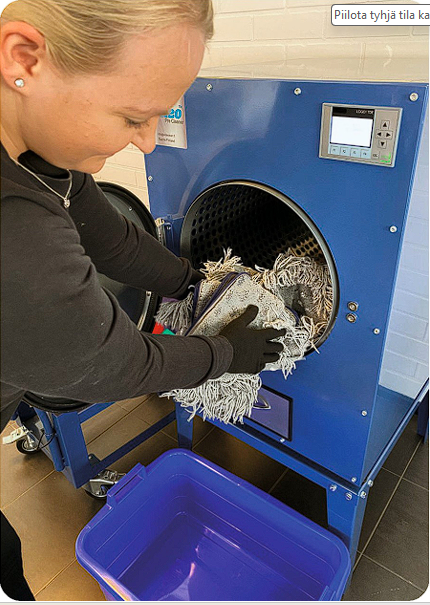
Professional cleaning is essential work. Its value is often noticed most clearly when it is missing: when spaces feel unsafe, hygiene fails, indoor environments deteriorate, or everyday operations no longer run smoothly.
Behind clean and functional spaces there is professional knowledge, leadership, methods, equipment, cost awareness and a large amount of practical expertise that too often remains invisible.
At the same time, many organisations are facing a familiar concern: professional cleaning work is losing some of its appeal. Recruitment is difficult, experienced workers are under pressure, supervisors are expected to manage increasingly complex service production, and the true value of cleaning is not always recognised even inside the organisations that depend on it.
This is a conversation the industry needs. Not as blame, but as a shared wake-up call.
Important Work Is Not Always Valued As Important Work
Cleaning services are too often seen mainly through cost. When the work is done well, it becomes almost invisible. When it is neglected, its importance is noticed immediately.
This creates a difficult starting point for the future of the industry. If cleaning is treated only as an expense, then professional competence, supervision, worker safety and service development are also pushed into the background.
Professional cleaning is not only about making spaces look tidy. It is part of:
- occupational health and safety
- usability of buildings and facilities
- customer, patient and user safety
- responsible service production
- everyday continuity of organisations
- employee wellbeing
When these connections are forgotten, the work becomes smaller in the eyes of others than it really is. And when the meaning of the work is not visible, it is harder to attract and retain people.
ESG Must Include People, Not Only Products
Sustainability and ESG reporting are becoming increasingly important for service providers and the organisations that buy their services. This is a positive development, but only if we understand the content broadly enough.
In cleaning services, sustainability discussions can easily become too narrow. The focus may remain on detergents, product labels, environmental criteria or procurement requirements. These are important issues, but they are not the whole picture.
The cleaning industry also carries a major responsibility for people.
Sustainability must include questions such as:
- How does the work affect the cleaner's health and safety?
- How is exposure to dust, residues, biological contaminants or chemicals prevented?
- How are workers trained and supervised?
- Are the tools and methods safe, efficient and appropriate?
- Is the workload realistic?
- Is professional competence recognised and developed?
- Are supervisors given the skills and support they need?
If ESG only looks at products, the worker disappears from the picture. That would be a serious mistake.
The social responsibility of cleaning services is not a side issue. It is central to the future of the industry.
Supervisory Skills And Cost Awareness Are Core Competences
Cleaning work is practical, but managing cleaning services is not simple.
Supervisors need to understand people, service quality, work methods, customer expectations, costs, scheduling, training, occupational safety and continuous improvement. These are demanding responsibilities.
When supervisory competence or cost awareness becomes weaker, the effects are quickly visible:
- work becomes only routine execution
- onboarding remains incomplete
- quality becomes inconsistent
- costs are not understood or communicated clearly
- employees feel less valued
- workload increases
- development stops
The basics of cleaning services are not small things. They are the foundation of quality, safety and financial sustainability.
Everyday routines can be carried out well, poorly, or somewhere in between. The difference is created by competence, leadership and understanding why the work is done in a certain way.
Research And Practical Knowledge Must Return To Everyday Work
The cleaning industry has knowledge. There is research, field experience, measurements, training material and decades of practical expertise. But too much of this knowledge seems to have become disconnected from everyday decisions.
Training and professional discussion should bring research and practice closer together again.
We need more attention to topics such as:
- physical and mental workload in cleaning work
- occupational exposure and risk recognition
- the impact of cleaning methods on worker safety
- handling and pre-cleaning of cleaning textiles
- service production management
- the relationship between cost, quality and workload
- how professional pride and recognition are built
Knowledge should not stay in reports, training folders or conference presentations. It must be translated into daily decisions, better tools, better leadership and safer work.
Service Production Needs To Be Taken To A Higher Level
The appeal of professional cleaning work will not be improved by a single campaign. It requires a deeper change in how the industry speaks about itself, how services are managed and how the value of the work is made visible.
We need to communicate more clearly:
- what value cleaning services create
- why professional cleaning requires competence
- how cleaning affects safety, wellbeing and continuity
- why investing in workers is a sustainability issue
- why supervisory skills are a strategic question
- how research can support practical service production
This cannot be solved only by adding more instructions. It requires conversation, education, better use of knowledge and genuine involvement of the people who understand the work from the inside.
We Need A Shared Conversation
There is a great deal of knowledge and experience in the cleaning industry. That is why this topic should be discussed openly and constructively.
One possible next step would be an interactive webinar on the future appeal of professional cleaning work. Not a one-way lecture, but a participatory discussion where people from the field, supervisors, trainers, service providers and clients could share experiences, concerns and ideas.
Questions worth discussing include:
- What is weakening the appeal of professional cleaning work right now?
- How can organisations show real respect for cleaning work?
- What do supervisors need in order to succeed?
- How should ESG and responsibility be discussed so that workers are not forgotten?
- How can research-based knowledge be brought back into everyday practice?
- What should the industry do differently this year?
Professional cleaning does not need more invisibility. It needs language, knowledge, recognition and the courage to raise service production to the level of importance it already has in everyday life.
A Possible Next Step
This discussion could be continued in an open webinar:
The Future Appeal of Professional Cleaning Work - What Do We Need To Understand And Do Differently?
The goal would not be to find one person to blame or one simple solution. The goal would be to open a constructive conversation, collect insights and make visible the competence, responsibility and value that already exist in professional cleaning.