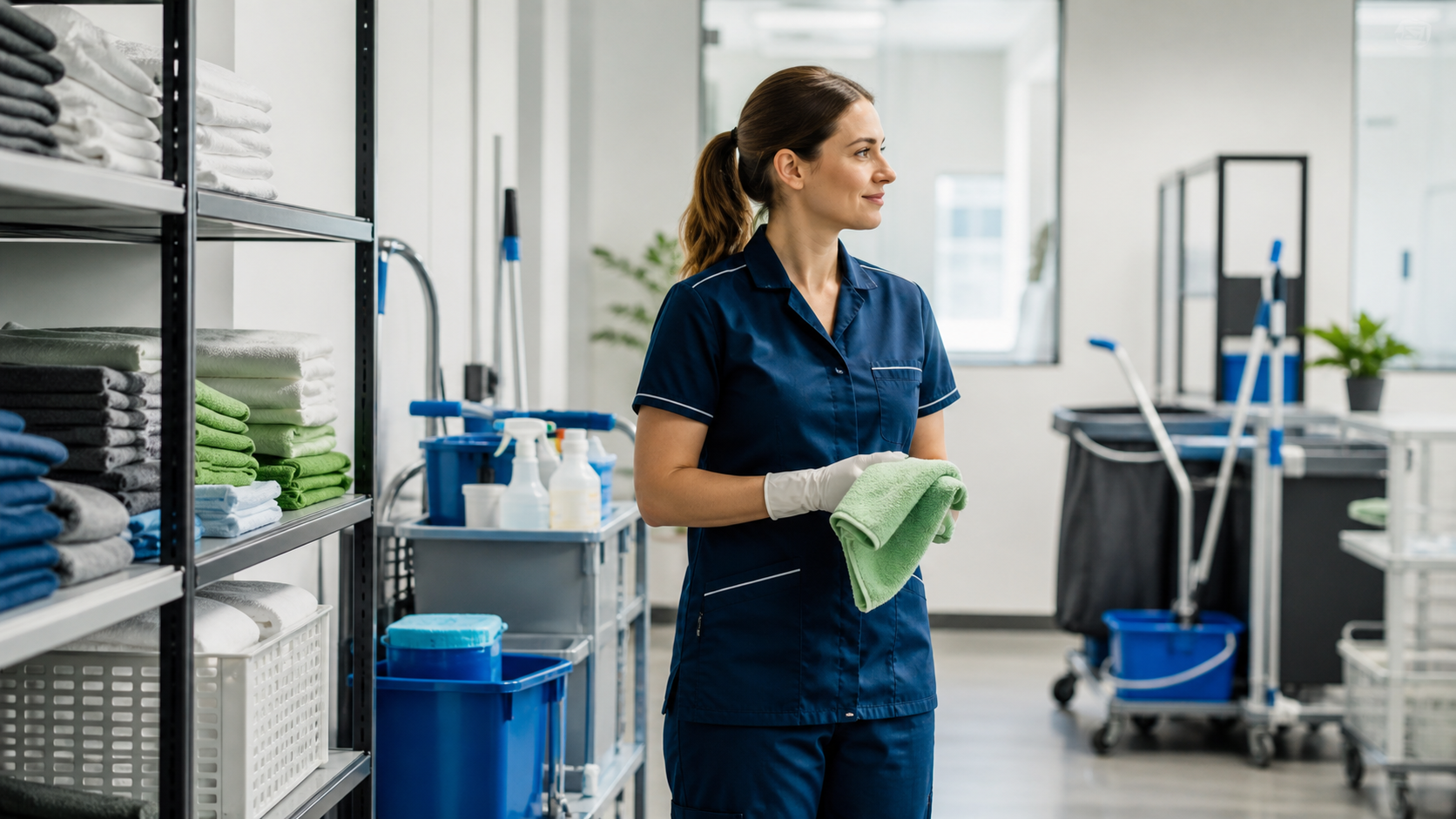
Cleaning work is essential, but its occupational safety and working conditions are still discussed too rarely. In Austria, the issue has been taken up at a national level: in 2026, cleaning and facility maintenance have been named a national occupational safety priority.
The aim of the Austrian Labour Inspectorate, Arbeitsinspektion, is to systematically increase awareness in the sector and strengthen both guidance and inspection activities. This is not only about preventing individual accidents, but more broadly about improving working conditions and reducing health risks.
The Strain of Cleaning Work Comes from Many Factors
The Austrian Labour Inspectorate identifies several key challenges in the cleaning sector, including physically demanding work, substances that may be harmful to health, high time pressure, fragmented working hours and work carried out across changing sites.
In addition, Austria highlights an issue that is not always recognised as an occupational safety question: the lack of social appreciation for cleaning work.
This is an important observation. Occupational safety is not created only through the right tools, instructions or protective equipment. It is also shaped by how work is organised, how much time is allocated for doing the work, and how visible and valued cleaning work is considered to be.
Prevention Is Key
What is especially interesting in Austria's approach is its preventive perspective. The risks of cleaning work are not examined only after problems or accidents have already occurred. Attention is directed in advance to working conditions, workload and exposure.
This matters because cleaning work has changed significantly. Methods, substances, tools, schedules and the organisation of work have all developed, while knowledge about work-related exposure and workload factors continues to increase.
Occupational safety should develop alongside the work itself.
The Saubere Sache Project Makes Cleaning Work Visible
Austria's 2026 focus is connected to the broader Saubere Sache project. The project's goals emphasise making cleaning work more visible, improving working conditions and reducing health risks.
It is also interesting that social media is being used to raise awareness. This shows that occupational safety is not only about official supervision or written guidance. It is also about communication, public discussion and building appreciation for the sector.
The safety of cleaning work needs to be discussed where people already encounter information.
Should Finland Do the Same?
In Austria, the cleaning sector has been brought into national focus. This sends a strong message: the workload, health risks and working conditions of cleaning work deserve systematic attention.
Finland has a great deal to learn from this approach. Cleaning work here is also physically demanding, time-pressured and often invisible. Occupational safety in the sector should not be viewed only through accident statistics, but as a whole that includes work planning, workload, chemical exposure, working hours, onboarding, appreciation and leadership.
Cleaning work enables safe, healthy and functional spaces for everyone else. For that reason, the working conditions of cleaning professionals should also be a visible part of the occupational safety discussion.
Austria's example raises an important question:
Is it time for Finland, too, to make occupational safety in cleaning work a national priority?